Exhibit II
The Battle of Munford
April 23, 1865
By the spring of 1865, the war was coming to an end, but fighting had not stopped everywhere.
Brigadier General John T. Croxton and his Federal cavalry were still moving across Alabama, destroying railroads, ironworks, military supplies, and other resources that could support the Confederate war effort.
Their path would eventually lead to Munford.
Croxton’s “Lost Brigade”
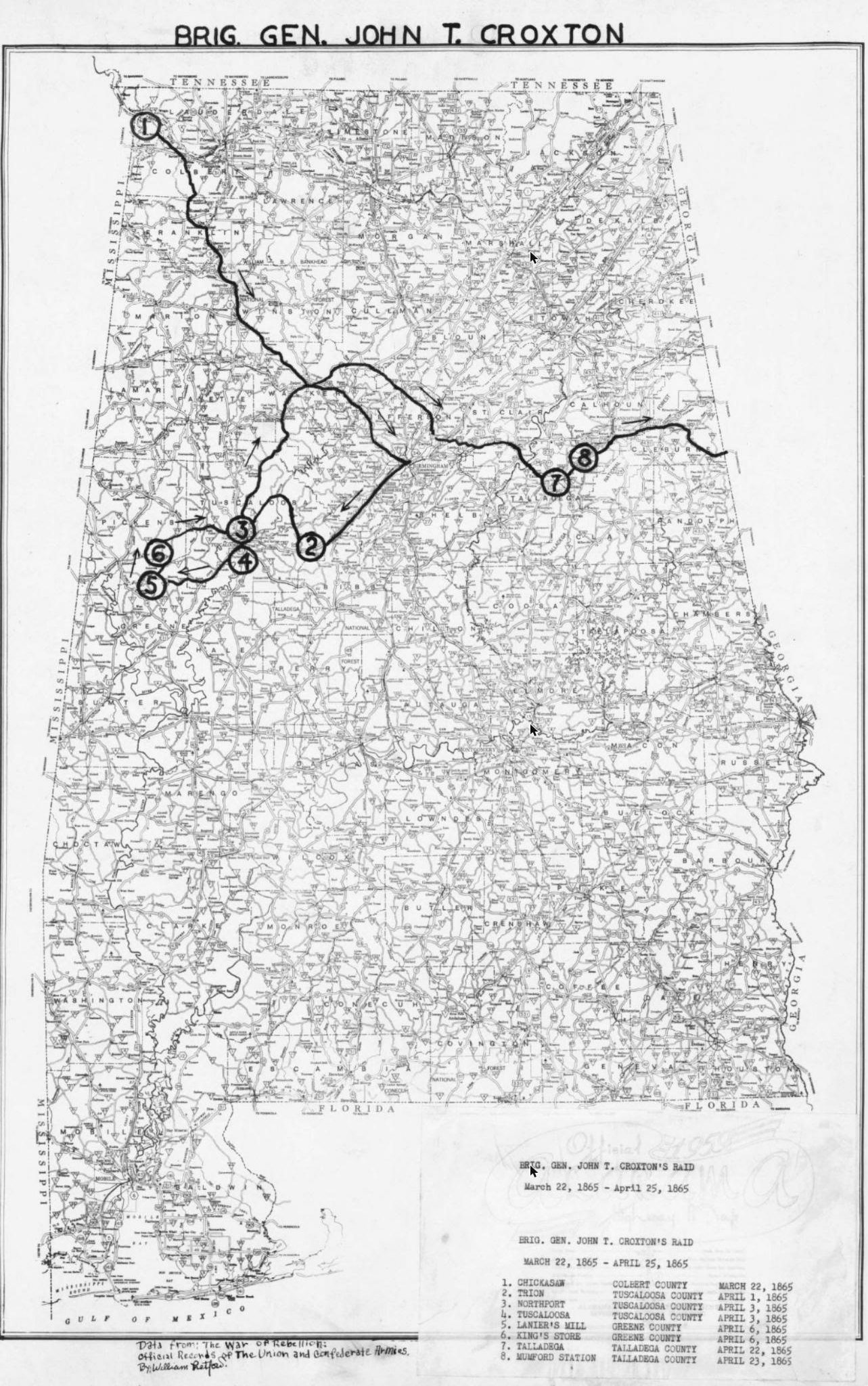
Croxton had been detached from Major General James H. Wilson’s larger cavalry force on March 30, 1865, with about 1,500 men.
His orders took him first toward Tuscaloosa, where his troops captured the city and destroyed most of the University of Alabama, then serving as a military school. Over the following weeks, Croxton fought Confederate forces at Trion and Romulus while trying to find his way back to Wilson’s main command.
Unable to reestablish contact, Croxton’s men became known as the “Lost Brigade.”
By late April, they were moving east across Alabama.
Talladega
On Saturday, April 22, Croxton’s cavalry reached Talladega.
A small Confederate force under Colonel Abner A. Hughes attempted to resist the Federal advance before falling back through town.
Croxton occupied Talladega that evening. The railroad depot, county jail, military facilities, and other property connected to the Confederate war effort were destroyed.
The following morning, his cavalry turned north.
Their route led directly toward Munford.
The Road to Munford
Early Sunday morning, April 23, the Second Michigan Cavalry moved ahead of Croxton’s main column.
The regiment was made up of experienced cavalrymen armed with Spencer repeating carbines and revolvers.
At Munford, Confederate soldiers had gathered to oppose them.
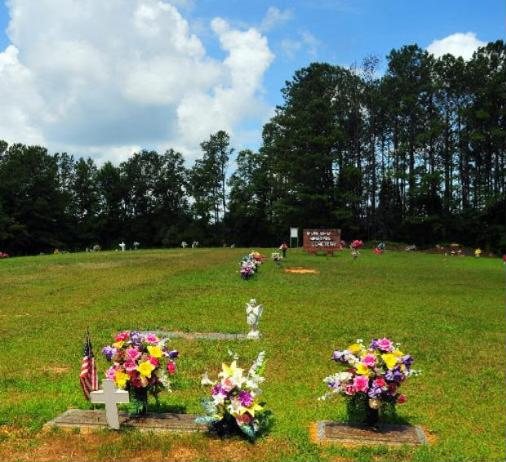
Two pieces of artillery were positioned on the hill where Munford Cemetery stands today, then the site of a Baptist church.
Among the Confederate defenders was Lieutenant Andrew Jackson “Jack” Buttram.
The Battle Begins
As the Federal cavalry approached, the Confederate cannon opened fire.
Colonel Thomas W. Johnston ordered the Second Michigan forward. Two companies under Lieutenant Woodruff charged the position.
The attack moved quickly.
According to the Federal account, the artillery was captured within about five minutes.
The Confederate line broke, but the fighting continued as the Federal cavalry pushed through Munford and Confederate soldiers withdrew from the hill.
Several Federal soldiers became separated during the charge and were captured before later being paroled.
Lieutenant Buttram Falls
During the fighting, Lieutenant Andrew Jackson Buttram was struck near the road below the artillery position.
He fell near Munford Methodist Church, only a short distance from where he would be buried the following day.
Buttram was 48 years old.
His death became the event most closely associated with the Battle of Munford, and he has long been remembered as arguably the last Confederate soldier killed in action east of the Mississippi River.
The Cost of the Battle
Buttram was not the only man who died during the action.
The Second Michigan also lost Edwin A. Burch and Sergeant Willis R. Rogers.
Other Federal soldiers were wounded, captured, or temporarily reported missing during the rapid advance.
The exact number of Confederate troops engaged at Munford is uncertain, but they faced a veteran Federal cavalry regiment with superior repeating firearms.
The engagement was brief, but men on both sides were killed.
The Raid Moves On
The fighting at Munford did not stop Croxton’s advance.
The Second Michigan continued north toward Blue Mountain, damaging railroad lines and destroying the Salt Creek Iron Works along the way.
At Blue Mountain, Federal troops destroyed additional military stores, railroad property, ammunition, and industrial facilities.
Croxton’s brigade continued into Georgia and finally reunited with Wilson at Macon on May 1.
One of the Final Battles
The Battle of Munford was fought only weeks before the Civil War finally ended across the country.
Robert E. Lee had surrendered the Army of Northern Virginia at Appomattox on April 9, but news traveled slowly and Confederate forces were still operating in Alabama.
For that reason, Munford is remembered as one of the final engagements of the Civil War east of the Mississippi River.
For the people of Munford, however, its importance became much more local.
A man had fallen beside the road. He was buried near the place where he died. And for the next 160 years, generations of people would work to make sure that place was remembered.